
Omani Frankincense
Omani Frankincense: Nature's Treasure and a Symbol of Oman's Rich Heritage
Today, frankincense remains a symbol of Omani identity and heritage, attracting researchers, tourists, and traders from around the world who seek to experience one of the finest natural products ever produced by nature.
The Omani Frankincense Tree
The Boswellia sacra tree is uniquely adapted to the harsh climatic conditions of southern Oman. It thrives in rocky mountains, valleys, and arid landscapes where few other trees can survive.
Typically growing between two and ten meters in height, the tree features light brown bark that peels away to reveal a reddish inner layer. This layer produces the resin that eventually becomes frankincense. Its deep and extensive root system allows the tree to anchor itself securely on steep rocky slopes while extracting limited moisture from the environment.
The tree generally begins producing frankincense resin between eight and ten years of age and can continue producing for many decades when properly managed.
Where Does Omani Frankincense Grow?
The primary habitat of Omani frankincense is the Dhofar Governorate in southern Oman. The tree is particularly abundant in the Nejd region, mountain slopes, valleys, and coastal plains.
The environmental conditions of Dhofar—including seasonal rainfall, limestone-rich soils, and favorable temperatures—create ideal conditions for producing some of the world's highest-quality frankincense. This unique environment has earned Oman a historic reputation as the legendary "Land of Frankincense."
How Omani Frankincense Is Harvested
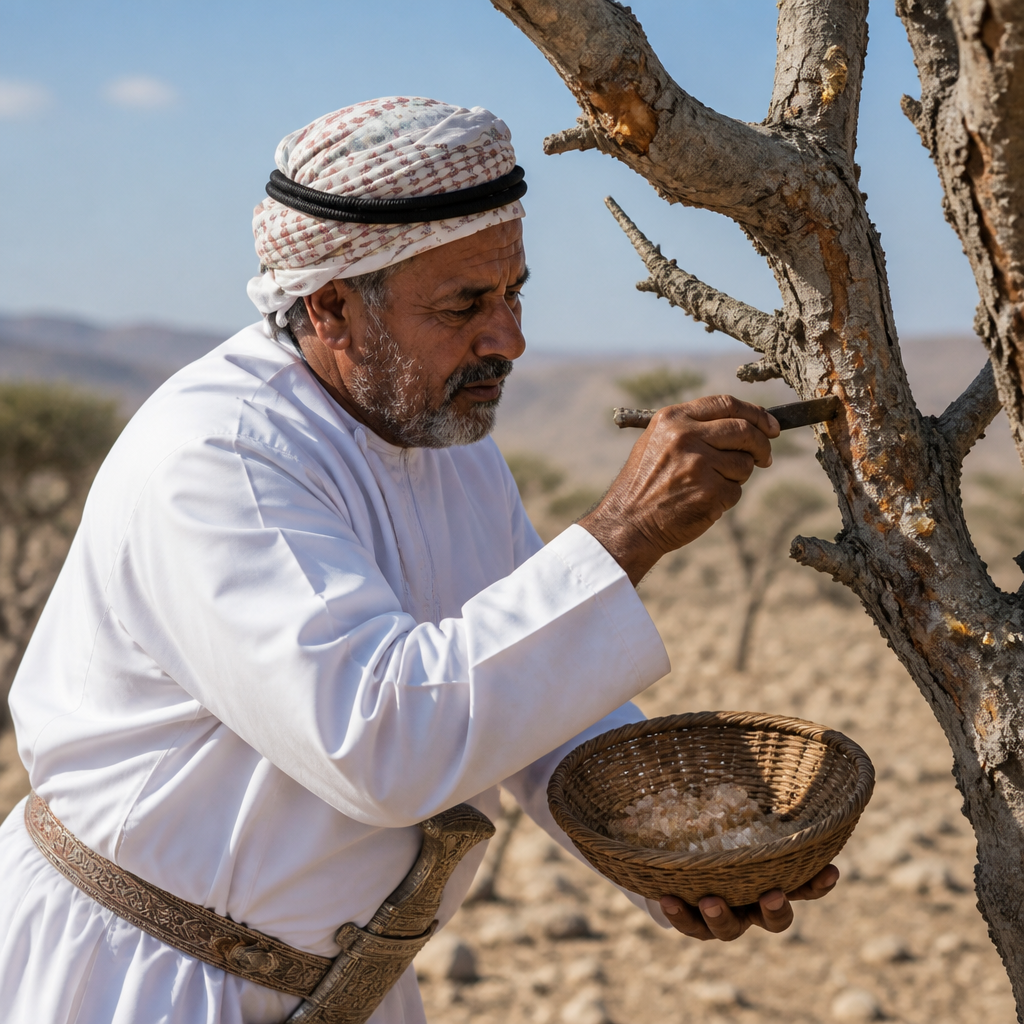
The extraction of frankincense is a traditional process that requires skill, patience, and knowledge. During the dry season, trained harvesters make small and shallow incisions in the bark of the tree.
A milky white sap slowly emerges from these cuts and hardens upon exposure to air. After several weeks, the hardened resin is collected by hand. Multiple harvesting rounds may occur during a season, with the highest-quality resin often obtained during later collections.
Proper harvesting techniques are essential to ensure the health and long-term sustainability of the tree.
Factors Affecting Frankincense Production
Several factors influence the quantity and quality of frankincense produced by a tree.
Tree Size
Larger trees with wider trunks and more extensive canopies generally produce greater quantities of resin.
Geographic Location
Trees growing in areas with slightly higher rainfall often yield more resin than those in extremely dry locations.
Harvesting Frequency
The number and timing of bark incisions significantly affect production. Sustainable harvesting practices help maximize yield while protecting the tree from long-term damage.
Health Benefits of Omani Frankincense
Omani frankincense has been valued for centuries in traditional medicine and is increasingly attracting scientific interest due to its therapeutic compounds known as Boswellic Acids.
Anti-Inflammatory Properties
Research suggests that frankincense may help reduce inflammation and support individuals suffering from joint discomfort and inflammatory conditions.
Respiratory Support
Traditionally, frankincense has been used to help ease coughs, clear airways, and support respiratory health.
Antimicrobial Effects
The resin contains natural compounds that exhibit antibacterial and antifungal properties, making it useful in various traditional remedies.
Digestive and General Wellness Benefits
Frankincense has also been used to support digestive health and overall well-being, although further scientific research continues to explore its full potential.
Traditional and Modern Uses of Frankincense
Throughout history, frankincense has served numerous purposes across different civilizations.
In religious ceremonies, it has been burned as incense for its pleasant aroma and symbolic significance. Ancient Egyptians used it in mummification rituals, while many cultures incorporated it into spiritual practices.
Today, Omani frankincense is widely used in:
- Perfume manufacturing
- Cosmetics and skincare products
- Aromatherapy
- Traditional medicine
- Luxury incense products
Types of Omani Frankincense
Several varieties of frankincense are produced in Oman, each with unique characteristics.
Al-Hojari Frankincense
Considered the finest and most valuable type, Al-Hojari frankincense is highly sought after for its purity, color, and fragrance.
Al-Najdi Frankincense
Known for its quality and versatility in both traditional and commercial applications.
Al-Shadhri Frankincense
A popular variety recognized throughout Dhofar.
Al-Shaabi Frankincense
Widely available and commonly used in local households and businesses.
Frankincense Markets in Oman
Visitors seeking authentic Omani frankincense often visit the famous Al Haffa Souq in Salalah. The market offers a wide selection of premium frankincense products, traditional perfumes, and Omani incense.
Depending on quality and grade, premium frankincense can range from 35 to 100 Omani Rials per kilogram or more.
Challenges Facing Frankincense Trees
Despite its importance, the frankincense tree faces several threats.
Unsustainable harvesting practices can weaken trees and reduce their ability to regenerate. Overgrazing by livestock often damages young seedlings, limiting natural forest regeneration.
Additional challenges include climate change, pests, mining activities, and extreme weather events, all of which can impact frankincense habitats.
Conservation and Sustainability Efforts
Oman continues to invest in scientific research and sustainable management programs aimed at protecting frankincense forests.
Researchers are studying tree populations, harvesting methods, and environmental factors to develop best practices for long-term conservation. Sustainable harvesting guidelines encourage limited bark incisions, adequate recovery periods, and improved grazing management.
These efforts help preserve one of Oman's most valuable natural and cultural resources for future generations.
Omani frankincense represents far more than a fragrant resin. It is a symbol of Oman's history, culture, trade, and natural heritage. From the rugged mountains of Dhofar to international markets around the world, this remarkable product continues to connect the past with the present.
As awareness of its economic, medicinal, and cultural value grows, protecting the Boswellia sacra tree becomes increasingly important. By supporting sustainable harvesting and conservation initiatives, Oman can ensure that the legacy of frankincense remains alive for generations to come.

